
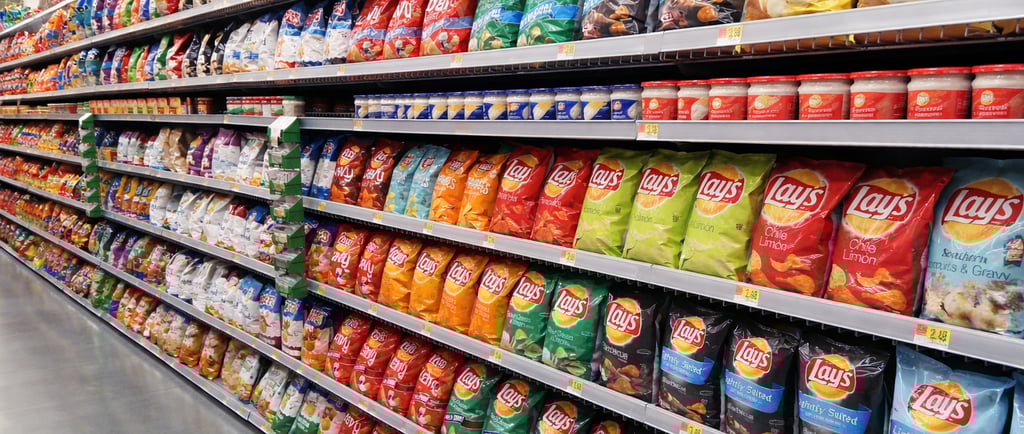

India’s retail story is one of dizzying opportunity and relentless competition, a narrative defined not just by a vast and diverse consumer base, but by the complex economics of shelf space warfare. In markets across the world, securing a spot on store shelves is a critical milestone for any brand, but in India — where more than 90% of retail still operates through unorganized channels and where traditional kirana stores coexist with modern supermarkets and e-commerce platforms — that milestone often feels like a battleground. For global brands, the question is not simply “Can we enter India?” but “Will Indian retailers let us stay?” and the answer to that hinges on a set of deeply interwoven criteria: retailer expectations, trade economics, inventory rotation, category fit, and long-term profitability. Understanding this decision framework — and why many international brands fail to make the cut — requires a deep dive into the shelf dynamics that drive India’s retail ecosystem.
At its core, the Indian retail landscape is defined by fragmentation. Unlike homogeneous markets such as the EU or the U.S., India’s mosaic of retail formats spans tens of thousands of small neighborhood stores, hyperlocal distributors, regional chains, experiential modern trade outlets, and a fast-growing online marketplace. According to industry analysts from IBEF and KPMG, while modern retail and online channels are growing rapidly and expected to contribute over 30% of organized consumer goods sales by 2030, traditional retail remains dominant, particularly for categories that rely on frequent repeat purchases — foods, beverages, dairy products, and everyday personal care items. For retailers of all sizes, shelf space is a finite resource, and every square inch represents opportunity cost. A retailer does not simply allocate space; it invests it in brands that promise high velocity, reliable replenishment, and profit margins that justify displacement of existing products.
Retailers are intensely performance-driven, and their expectations are shaped by real economic pressures. Traditional kirana stores, which account for the majority of retail in small towns and peri-urban India, operate on razor-thin margins. Local retailers typically target gross margins ranging between 15–25% depending on the category, but the turnover — frequency of sale — is often the decisive factor. For these frontline retailers, stocking a product that sits on the shelf for weeks without movement not only ties up working capital but also wastes premium display space that could be used for fast-moving alternatives. A McKinsey India FMCG study found that products with first-month sell-through rates below category averages are up to 3x more likely to be de-listed or downgraded in priority by retailers. This is a stark reality for many global brands that enter with strong global positioning but lack of localized consumer pull.
For larger-format modern retail chains — including organized grocery chains and national supermarkets — the calculus involves sophisticated category management models. These retailers leverage data analytics to assess not just current sales but future potential, factoring in variables such as price elasticity, SKU proliferation, historical rotation patterns, seasonal demand, and cross-category cannibalization. Shelf planners work with sell-through benchmarks and forecasted demand curves, often informed by data from Nielsen and IRI market intelligence, to ensure that every SKU contributes incrementally to the basket size. In these environments, product listings are awarded based on meritocratic metrics: brands with strong velocity, repeat purchase indicators, and marketing support are favored, while those with sporadic demand or limited promotional traction struggle to scale.
One of the most critical aspects influencing acceptance by Indian retailers is trade margins and the economics of distribution. Retailers expect brands — especially new entrants — to offer competitive margin structures that support the retailer’s own profit goals. This typically includes a combination of dealer margins, trade discounts, seasonal promotions, and cooperative advertising support. A Deloitte retail report analyzing FMCG distribution economics in India found that brands that do not match prevailing trade margin benchmarks see retail shelf placement limited to secondary or tertiary zones within stores, which dramatically reduces visibility and hampers rotation. For global brands that enter India with fixed global pricing strategies or hesitant discounting policies, this becomes a fundamental obstacle. Without margin flexibility, they fail to align with the financial incentives that drive retailers’ stocking decisions.
Closely related to rotation is consumer pull — the visible demand signal that retailers look for before doubling down on a brand. In many Western markets, broad advertising campaigns and celebrity endorsements can generate immediate traction. In India, however, consumer discovery often occurs at the point of sale, influenced by localized language, cultural relevance, and price perception. Anecdotal evidence from multiple category managers in Indian retail suggests that products with high initial curiosity but low repeat purchases are deprioritized quickly. A Nielsen consumer insights study revealed that Indian shoppers are highly price-sensitive and usage-driven; even premium global products must demonstrate clear, measurable utility in everyday consumption occasions or they fail to convert trial into loyalty. For example, an international juice brand that entered India with its global variant faced limited uptake because the flavor profiles did not align with regional taste preferences, resulting in low repeat purchases and sluggish shelf rotation.
Distribution logistics further complicate this ecosystem. India’s retail supply chain is highly decentralized, with a dense network of regional distributors and sub-stockists who command significant influence on which products enter which stores. Unlike markets with consolidated retail distribution, India’s model often requires brands to engage multiple layers of partners to reach both urban and rural counters. A study by PwC India on FMCG distribution networks found that brands with weak on-ground distribution footprints — particularly in tier II and tier III cities — suffer from inconsistent availability and intermittent shelf presence, which in turn signals risk to retailers who depend on steady stock for reliable sales. This distribution fragmentation contributes to what many industry insiders describe as “shelf invisibility,” where despite securing formal listing agreements, brands fail to maintain a consistent physical presence on counters due to gaps in last-mile logistics.
For many global brands, entering India without deeply understanding this decision framework results in disappointing outcomes: initial excitement giving way to stagnant shelves, stock de-listing, and wasted marketing investments. By contrast, brands that have succeeded in India demonstrate common strategies: they localize product offerings based on nuanced consumer insights; they structure trade economics to align with retailer expectations; they invest in distribution networks that ensure consistent availability; and they design promotional programs that drive measurable rotation. Such brands often collaborate closely with retailers to forecast demand, support category planning, and tailor offerings for specific regions or formats.
India is not a market where shelf space is given; it is a market where it is earned through consistent performance and strategic alignment with retailer economics. Brands that grasp this reality — and invest in the foundational work required to meet it — transform what might otherwise be a fleeting presence into enduring shelf success. In the ongoing war for limited retail real estate, understanding how Indian retailers decide which global brands make the cut is not just useful — it is essential for survival and growth in one of the world’s most promising consumer markets.
📩 Let’s discuss your India entry strategy.
mail: info@strategixindia.com
In India’s fiercely competitive retail environment, shelf space is awarded on performance, not promise. Retailers prioritize brands that deliver strong margins, rapid inventory rotation, reliable distribution, and sustained consumer pull. Global pedigree alone carries little weight if products fail to meet these commercial realities. International brands that succeed are those that align closely with retailer economics, localize their offerings, and actively support sell-through. In the end, winning shelf space in India is not about entry—it is about earning relevance, profitability, and consistency every single day.
Inventory rotation — the rate at which products move off the shelf — is another central metric that Indian retailers monitor closely. High rotation signals strong consumer demand and supports consistent reorders. Retailers, whether operating a corner store in Jaipur or a supermarket chain in Bengaluru, track rotation through sales records, distributor feedback, and increasingly through point-of-sale data. Products that fail to hit rotation benchmarks within the initial weeks of launch face rapid reclassification into secondary shelf positions, or worse, removal. Research by Euromonitor International underscores that rotation stability within the first six months of listing is one of the single strongest predictors of a brand’s long-term shelf success in India. For this reason, global brands that underestimate the importance of localized marketing, sampling programs, or targeted promotions frequently see their products languish on shelves despite initial hype.
The interplay of these forces — economics, rotation metrics, distribution reliability, and consumer traffic — creates what has been aptly termed the “shelf space war” in India. Retailers, acting as custodians of the limited real estate on their shelves, make decisions that reflect not just product quality, but the full spectrum of commercial viability. Retailers want assurance that a product will move, that consumers will buy it again, and that it will contribute positively to the store’s profitability without jeopardising the performance of existing SKUs.