
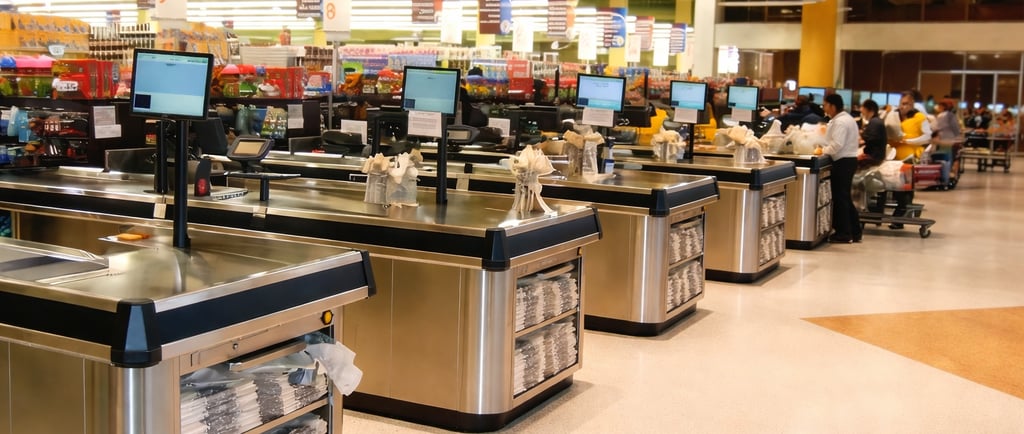

India’s rise as a global consumer market is nothing short of remarkable. With a population exceeding 1.4 billion and a rapidly expanding middle class expected to reach more than 580 million people by 2025, the country is projected to be among the top three global consumer markets by the end of this decade. Retail spending in India is on an upward trajectory, estimated to exceed $2.5 trillion by 2030, driven by aspirations for quality products, urbanization, and accelerating digital adoption. Yet, beneath this promise of growth lies a persistent and often understated reality: many international brands fail to transition from customs clearance to meaningful presence on Indian store counters. While many global players secure initial entry, the hidden labyrinth of regulatory hurdles, logistics complexities, and distributor-related friction frequently delays, dilutes, or entirely derails their ability to secure sustainable shelf space.
For many global companies, the initial stages of entering India involve navigating a complex and often opaque regulatory framework. Unlike markets such as the European Union or the United States, where regulatory frameworks are harmonized across large economic zones, India’s product regulations are highly segmented by category and oversight body. For food and beverage companies, compliance with the Food Safety and Standards Authority of India (FSSAI) is mandatory. The FSSAI’s regulations require detailed documentation for ingredients, nutritional claims, and quality assurance processes, often with additional regional interpretations. A KPMG India regulatory study found that regulatory misclassification and incomplete documentation account for up to 35% of delayed approvals for international food and nutraceutical products. These delays are not trivial; they can postpone product launch timelines by months, eroding first-mover advantages and increasing market entry costs.
Compounding the regulatory burden is the challenge of aligning global formulations with Indian standards. Many ingredients and additives that are permissible in the U.S. or European markets are either restricted or subject to specific usage limits in India. For example, certain food preservatives, dairy stabilizers, and nutraceutical compounds accepted in other jurisdictions must undergo additional scrutiny or reformulation to comply with Indian norms. These technical compliance challenges can lead to repeated rounds of testing, re-submission of documentation, and costly adjustments to supply chains and manufacturing processes — all of which contribute to extended timeframes between customs clearance and shelf readiness. Moreover, the lack of clear, consolidated guidance on product classification often results in brands being reviewed under frameworks meant for unrelated categories, triggering further regulatory confusion.
Parallel complexities exist in the cosmetics and personal care segment, where oversight by the Central Drugs Standard Control Organization (CDSCO) adds another layer of procedural rigor. Despite global harmonization efforts, India’s cosmetic regulations involve specific ingredient approvals, mandatory labeling requirements in local languages, and documentation that reflects compliance with Indian safety standards. The result, as noted in research by Euromonitor International, is that several international beauty brands face launch delays of 6-12 months when their submission packages fail to reflect Indian regulatory expectations, even when products are already compliant in other major markets.
Once customs clearance and regulatory approval are achieved, another set of barriers emerges in the logistics domain. India’s geography, while vast and economically diverse, presents real logistical challenges. Cold chain infrastructure — essential for dairy, ice cream, certain beverages, and perishable foods — remains underdeveloped outside major metropolitan corridors. According to a report by the Confederation of Indian Industry (CII), less than 15% of India’s cold storage capacity is connected to organized supply chains, and much of it is concentrated in a few states like Maharashtra, Punjab, and Uttar Pradesh. For global brands accustomed to robust refrigerated logistics across entire countries, this bottleneck means increased spoilage risk, inconsistent quality delivery, and higher operational costs. Even in ambient categories, roadway congestion, state-level transit permits, and variable warehousing standards contribute to delayed deliveries and inconsistent product availability, ultimately affecting the ability of products to remain in stock on retail shelves.
Distribution-related challenges compound the issue further. India’s retail ecosystem remains predominantly unorganized, with over 90% of retail transactions occurring through small, independent kirana stores. These retailers are often serviced by regional distributors rather than centralized national supply chains. While modern trade — including organized supermarket chains and digital commerce platforms — is expanding, true nationwide reach still necessitates reliance on a network of local distributors, wholesalers, and sub-distributors. For international brands, building and managing such networks is both expensive and time-consuming. Distributors typically demand significant margin commitments, promotional support, and assured volume movement before prioritizing new products. A McKinsey India study on FMCG distribution found that brands that do not offer competitive trade terms and consistent supply schedules are deprioritized by distributors within the first 120 days of launch, irrespective of consumer interest or marketing spend. This dynamic results in products sitting in warehouses or limited to a few urban outlets, rather than rotating actively through a wide spectrum of retail counters.
The distributor challenge is intricately tied to another less-discussed but equally influential factor: the retailer’s perspective on risk and ROI. In India’s competitive retail environment, shelf space is a scarce and valuable commodity. Retailers — whether small shop owners or buyers for larger chains — allocate space primarily to products that demonstrate quick inventory turnover, dependable delivery, and attractive margins. Imported products, by virtue of higher price points and perceived niche positioning, often struggle to deliver rapid sell-through without accompanying consumer demand signals. A Nielsen India consumer survey highlights that while urban consumers show strong interest in international brands, purchase frequency declines sharply when products exceed specific price thresholds or do not resonate with localized consumption occasions. Distributors and retailers, observing stagnant movement, subsequently reduce reorders or replace products with locally manufactured alternatives that promise faster returns on limited shelf space.
Even in cases where global brands manage to clear regulatory hurdles, navigate logistics, and secure initial distribution, maintaining consistency in retail presence remains a struggle. India’s evolving tax regimes — including frequent changes in Goods and Services Tax (GST) classifications and interstate levies — introduce cost variability that brands must absorb or pass on to consumers. This volatility complicates forecasting and pricing strategies, affecting distributor confidence and retailer enthusiasm. According to a PricewaterhouseCoopers (PwC) analysis, tax-driven price fluctuations have contributed to reduced demand elasticity in middle-tier urban and rural markets, where price sensitivity is particularly acute.
What emerges from this interconnected web of regulatory, logistics, and distribution barriers is a powerful lesson: successful entry into India’s retail ecosystem demands far more than compliance on paper and supply chain contracts. It requires in-depth, localized market intelligence; proactive regulatory alignment well before product shipment; strategic investment in distribution relationships; and scalable logistics solutions that account for India’s infrastructure realities. Brands that treat customs clearance as the final milestone often learn the hard way that it is only the beginning of a far more challenging journey toward sustainable retail presence.
Despite these hurdles, success stories do exist. Global companies that have methodically phased their entry — starting with urban modern trade, building consumer demand through localized campaigns, investing in regional distributor partnerships, and iteratively refining their product offerings to meet regulatory and cultural expectations — have seen steady growth and increased shelf longevity. These success cases underscore that India rewards thoughtful, patient, and adaptive market entry strategies.
Ultimately, what separates international brands that flourish on Indian store counters from those that falter is not merely the quality of the product, but the depth of preparation, respect for India’s unique market architecture, and willingness to invest in localized solutions that bridge the gap between customs and counters. This transition, though fraught with hidden barriers, can be navigated — but only by those who recognize that India’s retail promise demands more than ambition; it demands mastery of complexity.
Conclusion
For international brands, the journey from customs clearance to consistent shelf presence in India is defined less by market potential and more by executional complexity. Regulatory compliance, infrastructure limitations, and distributor dynamics collectively determine whether a product reaches—and stays on—store counters. Brands that underestimate these hidden barriers often stall despite strong demand signals. In contrast, those that plan holistically, invest in local expertise, and align regulatory, logistics, and distribution strategies early are far better positioned to convert India’s scale into sustainable retail success.